-
by
A melted gummy in the bottom of a hot car, a stale cookie left on the counter, or a chocolate bar mistaken for an ordinary snack can turn a good purchase into a wasteful – or unsafe – situation. Knowing how to store cannabis edibles protects the flavor, texture, potency, and privacy of products you paid for. For Inland Empire customers, heat is usually the biggest concern, but humidity, light, oxygen, and household access matter just as much.
Edibles are food first, cannabis products second. The safest storage plan follows the package instructions, keeps products in their original labeled packaging whenever possible, and makes them inaccessible to children, pets, and anyone who should not consume them.
How to Store Cannabis Edibles at Home
Start with the label. Licensed California edibles are tested, clearly dosed, and packaged with storage directions and a best-by date. Those directions should lead when they differ from general advice, especially for refrigerated products such as infused beverages, baked goods, gummies with perishable ingredients, or products made with dairy.
For most shelf-stable edibles, choose a cool, dark, dry cabinet away from the stove, dishwasher, sunny windows, and any area that warms up during the day. A bedroom closet shelf or dedicated kitchen cabinet can work well if it stays consistently cool. The top of the refrigerator is not a good option because appliances give off heat.
Keep the edible in its original child-resistant container or pouch. That packaging does more than identify the brand and dose. It helps limit air and moisture exposure while preserving required warnings and serving information. If an outer package is damaged, place the sealed product inside an opaque, airtight container and retain the original label with it.
A locked container or lockable cabinet is the standard worth following, not an optional extra. Edibles can look and smell like regular candy, baked goods, or drinks. Store them well above counter height and out of sight, separate from everyday snacks. This is especially necessary in homes with kids, pets, roommates, or frequent visitors.
Keep heat, sun, and moisture out
Southern California heat can change an edible quickly. Chocolate blooms or melts, gummies fuse together, hard candies become sticky, and baked products dry out. More importantly, prolonged heat and direct light can gradually degrade cannabinoids, leaving the product less predictable by the time you use it.
A target range of about 60 to 70 degrees Fahrenheit is ideal for many shelf-stable edibles, but consistency matters more than chasing a perfect number. Do not leave products in a garage, glove box, patio, mailbox, or delivery area after they arrive. Even a short stretch in a parked vehicle can be enough to ruin a chocolate bar or soften a gummy package.
Moisture causes a different set of problems. Humidity can make gummies sweat, weaken some packaging, and encourage spoilage in products that are not designed for it. Avoid storing edibles near the sink, coffee maker, or bathroom. Do not move a product into a container that is not completely dry.
When the Refrigerator Makes Sense
Refrigeration is useful for chocolate, products with dairy or fruit ingredients, and anything whose label says refrigerate after opening. It is also a practical solution during a heat wave when your home does not stay cool. For chocolates, refrigeration prevents melting but can cause condensation if the product is repeatedly taken in and out.
To avoid that issue, keep the edible in its sealed original package, then place it in an airtight container before refrigerating. When you are ready to use it, let the package sit at room temperature for a few minutes before opening. That reduces moisture buildup on the edible itself.
Gummies are more complicated. Refrigeration may help in extreme heat, but it can also make them firmer and change their chew. If the package does not require refrigeration and your cabinet is cool and dry, pantry storage is usually preferable. If you do refrigerate gummies, use an airtight container so they do not absorb refrigerator odors or moisture.
Do not freeze edibles unless the manufacturer specifically recommends it or you need to preserve a product for a longer period. Freezing can work for certain baked goods, but texture often suffers after thawing. Chocolate can discolor, gummies may become wet or grainy, and single-dose pieces can stick together. If freezing is necessary, divide products into clearly labeled portions and avoid repeated thawing and refreezing.
Store Each Edible Format the Right Way
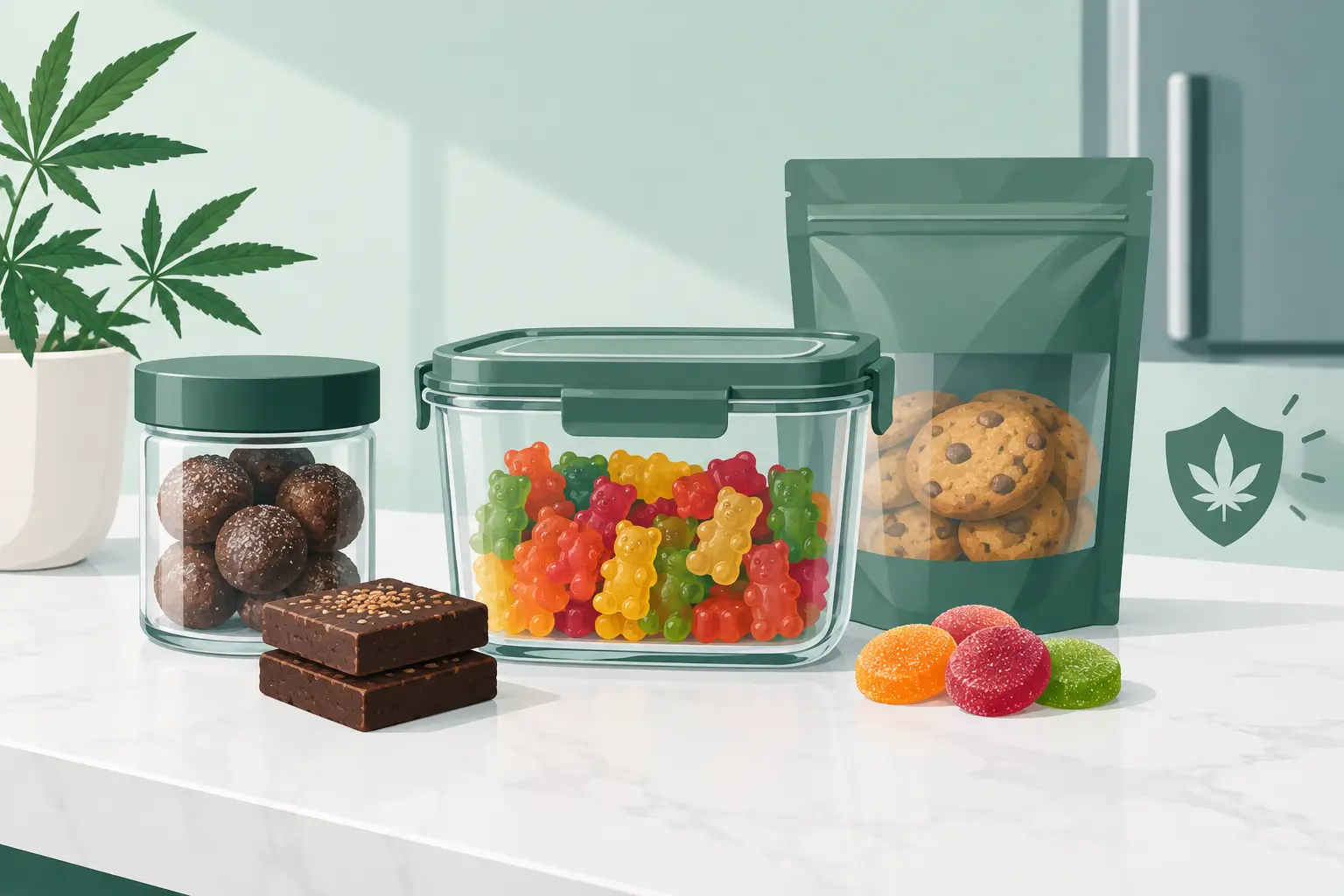
The format affects the best storage choice. Chocolates need the coolest conditions because they melt easily. A dark cabinet is fine in mild weather; a sealed container in the refrigerator is better during hot months.
Gummies, chews, and hard candies generally do best in a cool, dry cabinet in their sealed pouch or jar. Keep them away from direct sun and heat sources. If pieces begin sticking together, do not guess at a replacement dose by cutting up an unmarked clump. Check the package serving size and handle each piece carefully once it has cooled.
Cookies, brownies, and other baked edibles deserve the same food-safety judgment you would use for non-infused versions. Shelf-stable products can stay in a cool pantry until the stated date. Products with cream cheese, dairy fillings, fresh fruit, or instructions to refrigerate belong in the refrigerator. When in doubt, follow the product label instead of assuming cannabis makes food shelf-stable.
Beverages and syrups should remain sealed until use and be stored upright in a cool, dark place unless the label says otherwise. Refrigerate after opening when directed. Shake only if the package instructs you to, since some beverages are formulated differently and should not be handled like a homemade infusion.
Protect Potency and Dose Information
Cannabinoids are sensitive to heat, light, and oxygen over time. That does not mean an edible becomes useless the day after its best-by date, but it does mean flavor, texture, and potency can become less reliable. If consistent dosing matters to you, buying fresh, storing properly, and using products within the recommended timeframe is the smarter approach.
Avoid transferring edibles into a plain sandwich bag, candy dish, or unlabeled kitchen container. You lose the THC amount per serving, the total package dose, allergen information, and the ability to distinguish an infused product from regular food. That creates an easy path to accidental consumption.
If you need to separate a multi-serving package, label every container with the product name, date, milligrams of THC per piece or serving, and a clear adult-use warning. Keep it locked after every use. For products containing CBD as well as THC, include both amounts so there is no confusion later.
It is also wise to keep different edible types apart. A high-dose product should not share an unmarked container with lower-dose gummies, and sleep-focused products should not be mixed with daytime options. Organization makes your next dose more deliberate and prevents the guessing that leads to uncomfortable experiences.
Check Before You Consume
Inspect an edible before using it, particularly if it has been stored for weeks or months. Throw it out if you see mold, unusual moisture, a broken seal, major discoloration that is not normal for the product, or a sour or off smell. With baked goods and refrigerated products, food-safety concerns come before saving money.
For chocolates, a white or gray coating may be fat or sugar bloom rather than mold. It is often a quality issue caused by temperature swings, not an automatic safety issue. Still, if the package was compromised, the product smells off, or you are not confident about its condition, do not consume it.
When ordering lab-tested edibles for delivery, bring the package inside promptly and put it away before opening anything else. Kronic Candy customers in Rancho Cucamonga and nearby communities can protect their products from the first minute at home by having a cool, locked storage spot ready before delivery arrives.
A little preparation keeps edibles tasting the way they should and ensures the labeled dose remains the dose you can rely on. Store them cool, dark, dry, labeled, and locked – then enjoy them only when you are ready, in the setting you intended.