-
by
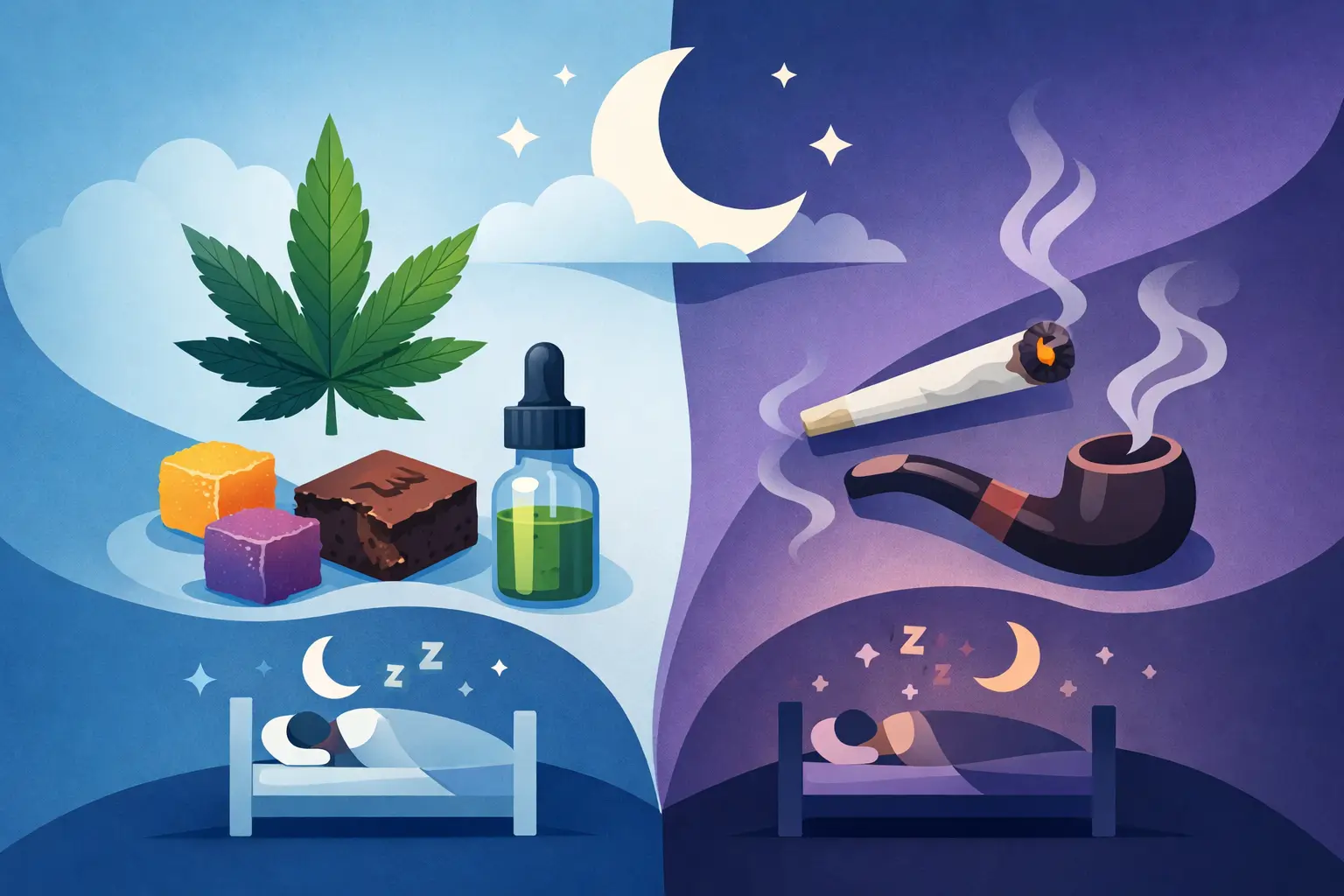
A 10 p.m. decision can feel very different at 2 a.m. when you are still awake, or at 7 a.m. when you need to be alert. Edibles vs smoking for sleep is less about finding one universal winner and more about matching the method to your schedule, experience level, and tolerance for delayed effects. The faster option is not always the better option, and the longest-lasting option can be inconvenient if you need a clear morning.
For adults 21 and older, both methods can fit a nighttime routine. The practical difference is simple: smoking typically takes effect quickly and fades sooner, while edibles take longer to arrive and can last well into the night or next morning. Knowing that difference before you order can prevent the two most common problems: taking more too soon or using a product too late.
Edibles vs Smoking for Sleep: The Timing Difference
Smoking or inhaling cannabis usually produces noticeable effects within minutes. That makes it easier to assess how you feel in real time. Someone who wants to relax before bed can take a small inhalation, wait a few minutes, and decide whether they need anything else. Effects often peak sooner and commonly taper off within a few hours, though the exact experience depends on the product, potency, tolerance, and individual metabolism.
Edibles move on a different clock. A gummy, chocolate, or other infused food must be digested before its effects become noticeable. Many people feel something within 30 minutes to two hours, but a full stomach, metabolism, and the edible format can all change that window. Effects may last six hours or more, which can be appealing for people who do not want to wake up and re-dose in the middle of the night.
That delayed onset is also why edibles require more patience. Taking another dose after 30 minutes because the first one seems weak is a classic way to overshoot your comfort level. If sleep is the goal, give the product enough time before making any decision about more.
When Smoking May Make More Sense
Smoking may suit an experienced adult who wants quick, adjustable effects close to bedtime. It can be easier to use a modest amount and stop once you feel relaxed. This degree of control is useful when you have had a long day but still need to wake up early, handle school drop-off, or be sharp for a morning commitment.
The trade-off is duration. A smoke session may help you settle down, but it may not last through the entire night. Some people find they wake up after the effects have faded. Others simply prefer a shorter experience because they do not want cannabis effects carrying into the next day.
Smoking also comes with respiratory considerations. Combustion creates smoke, and smoke can irritate the throat and lungs. If you have a respiratory condition, are sensitive to smoke, or simply dislike the odor, it may not be your preferred route. Cannabis should not be used in a way that puts anyone else in your home at risk from secondhand smoke, especially children or pets.
When Edibles May Make More Sense
Edibles can be a practical option when you want a longer, more discreet nighttime experience. There is no smoke, no lingering flower odor, and no need to step outside. For many adults in apartments, shared homes, or residential neighborhoods, that convenience matters as much as the effects themselves.
The longer duration may also fit people who have enough time to plan ahead. If you generally get in bed around 11 p.m., an edible may be better taken earlier in the evening rather than at the moment you turn off the lights. The exact timing will depend on your prior experience with edibles, whether you have eaten recently, and the serving size.
The downside is less flexibility. Once an edible is fully active, you cannot quickly reduce the intensity. A dose that feels manageable to one person may feel much stronger to another, particularly for someone new to THC or returning after a break. Start low, stay patient, and avoid treating an edible like an instant sleep aid.
Dose Matters More Than the Format
A low, measured dose can be more useful than choosing between the “right” edible or the “right” strain. Product labels should clearly state total THC and THC per serving. For adults with little or no edible experience, 2.5 mg of THC is a cautious starting point. Some adults may choose 5 mg, but higher starting doses are not automatically better for relaxation or sleep.
With smoking, the same principle applies. Take one small inhalation, then wait long enough to understand the effect before continuing. High-potency flower, infused pre-rolls, concentrates, and large hits can make it harder to stay within a comfortable range, even for regular consumers.
CBD may be part of some nighttime products, but it does not cancel out THC or guarantee a sleep result. Ratios, individual response, and product quality all matter. Be careful with broad claims about specific cannabinoids, strains, or terpene profiles. What feels calming for a friend may not feel the same for you.
Plan for the Morning, Not Just Bedtime
The best choice often comes down to what happens after you wake up. Smoking may be easier to fit into a late-evening routine because the effects are usually shorter. Edibles can be better for a longer night at home, but they can also leave some people feeling groggy or mentally slow the next morning, especially after a higher dose or a late dose.
If you need to drive, operate equipment, work, or make important decisions early the next day, use extra caution. Do not drive while impaired, and do not assume you are ready to drive simply because you slept for a few hours. Give yourself a clear schedule and enough time to recover before getting behind the wheel.
Alcohol is another poor match for a cannabis sleep routine. Combining alcohol with THC can intensify impairment, nausea, dizziness, anxiety, and poor decision-making. The same caution applies to prescription sleep medications, sedatives, and other substances that can cause drowsiness. If you take medications or have a medical condition, speak with a qualified healthcare professional before using cannabis.
A Practical Nighttime Shopping Checklist
When comparing products, look past flashy packaging and focus on information that helps you dose responsibly. A reliable cannabis product should have clear lab-tested potency information, a readable serving size, and secure packaging. For edibles, check the milligrams per piece rather than only the milligrams per package. For flower or pre-rolls, consider whether the potency and format match your usual comfort level.
Storage matters, too. Keep edibles in their original child-resistant packaging and out of reach of children and pets. They can look like ordinary candy or snacks, which makes secure storage non-negotiable. Keep all cannabis products in a cool, dry place away from direct heat.
For Rancho Cucamonga-area adults who prefer not to make a late dispensary trip, Kronic Candy offers lab-tested cannabis products delivered discreetly to eligible residences. Whether you choose flower or an edible, ordering a clearly labeled product from a trusted, licensed source gives you a better starting point than guessing at dose or quality.
So, Which One Is Better for Sleep?
Smoking can be the better fit when you want fast feedback, a shorter window of effects, and more control over how much you use. Edibles can be the better fit when discretion and longer-lasting effects matter more, and you have time to wait for the dose to come on gradually. Neither method is automatically better for every adult or every night.
Keep your first nighttime experiment simple: use one product, choose a conservative dose, skip alcohol, and make sure you have nowhere to drive. A calm, well-planned routine will do more for a comfortable night than chasing the strongest product on the menu.